Industrial Lighting Upgrades Orange County: Conserve Energy, Shine Bright
Orange County companies reside in a bright, competitive landscape. From hospitality centers in Anaheim to logistics backyards near the 91, every area tells a story with light. The difficulty is, too many centers still rely on worn out fluorescent strips, burned out car park heads, and hot metal halide cans that guzzle power and undercut safety. Updating to high effectiveness lighting is not a vanity job. It is among the fastest repayment moves most structures can make, and in our market, it can likewise be the distinction between passing a Title 24 evaluation and failing a lease requirement.
I have actually invested years walking Orange County ceilings and roofs, from little offices in Santa Ana to sprawling warehouses in Irvine. The effective jobs have one thing in typical: they deal with lighting as a system. When you integrate the ideal fixture, the right optic, the right control, and the ideal electrical expert, the meter decreases and the space looks better. That is the sweet spot.
Why upgrades pencil out in Orange County
Electricity in Southern California is not low-cost. Commercial rates in the SCE territory typically land in between the high teens and upper 20 cents per kWh depending upon schedule, need charges, and time of usage. If your structure runs lights 60 hours a week, small inefficiencies stack into big expenditures. An older 4-lamp T12 troffer might draw 160 watts at the wall. A properly specified LED troffer replacement can provide equal or much better light at 30 to 40 watts. In a bank of 100 components, that is approximately 12 to 13 kW shaved during occupied hours.
Translate that into an office running 3,000 hours per year: 12 kW multiplied by 3,000 hours is 36,000 kWh avoided. At 22 cents per kWh, the lighting line item stop by around 8,000 dollars a year before controls even enter the conversation. Storage facilities, gyms, and supermarket frequently run more hours and see larger gains. Maintenance is a second cost savings stream. Fluorescents and metal halide lights fail frequently, need lifts, and carry labor costs. LEDs with L70 life times in the 50,000 to 100,000 hour variety can go a years or more in normal schedules.
Every home type benefits differently. A retail flooring needs punch and color rendering that assists product. An office rewards harmony and low glare that decreases eye stress. Industrial aisles and packing docks must prioritize vertical illumination and security. The point is to tailor, not copy and paste.
Title 24, developing code, and practical compliance
California's Title 24 Part 6 sets performance guidelines for lighting power density, controls, and acceptance screening. The language can feel dense, however the spirit is basic: use less power to supply the light you actually need, and consist of automatic controls. For tenant enhancements or ground up work, code requires features like tenancy picking up, partial off in passages, and daylight harvesting in daylit zones. Existing structures see more versatility under changes, yet when a job strikes particular scope thresholds, code starts. This is where an Orange County electrical contractor who understands Title 24 and the local inspectors can keep you on schedule.
Practical ideas from the field:
- Put eyes on your glazing. If you have large windows along a border, daylight sensing units paired with dimmable chauffeurs can cut energy 10 to 30 percent in those zones with no grievances from occupants.
- Use job sensing in private workplaces. Individuals do not always like lights popping on. Manual on with automated off satisfies code and prevents the ghost-on perception.
- For storage facilities, bi-level high bay sensors that drop to 10 to 20 percent when aisles are empty are trustworthy, code-friendly, and repay rapidly. The secret is proper sensing unit intending and dead time settings checked during commissioning.
- Acceptance screening is not a rule. Keep your controls sequence written and basic. A proficient industrial electrical contractor in Orange County will validate settings and get ready for the tester well before the last day on site.
Retrofit, replace, or redesign
There is no single right path. We assess structure, ceilings, existing controls, visual needs, and budget plan. Expect these alternatives to appear during scoping:
- One-to-one component swap. Old troffer out, LED troffer in. Fast, clean, satisfies most office requirements. Select a glare-controlled lens or center basket design with an unified glare score low enough for screen work.
- LED kits into existing housings. If the housings are good and the ceiling grid is picky, retrofit sets can cut labor and waste. I just define sets when the thermal path is solid and the maker backs it with a real warranty.
- Lamp-only relamps. Switching fluorescent tubes for LED TLEDs is appealing. It is also the most unequal in outcomes. If the sockets are fragile, ballasts dated, or the optics incorrect, you end up chasing issues. I utilize this strategy in back-of-house locations or really tight spending plans, and only with DLC-listed items where wiring method and labeling are clear.
- Full redesign. In retail, restaurants, laboratories, and campuses, huge gains come from beginning over. We get rid of mess, add layers, resolve glare, and re-aim the space. The energy cost savings remain, however the chauffeur is visual quality and brand.
There are edge cases. For a mid-rise medical structure with asbestos in the acoustic tiles, dropping in surface-mounted LED troffers avoids interrupting the plenum, minimizes containment expenses, and still produces an even ceiling. For historic lobbies in older properties near Old Towne Orange, we typically conceal effective sources inside existing decorative real estates to keep the character while improving reliability. Those decisions originate from strolling the site, not guessing.
Controls that save cash without making enemies
Controls deliver the second half of the cost savings, but they can backfire if they battle how individuals utilize the space. I have fixed more than a few jobs where sensors turned off lights throughout discussions or daylight dimming left conference rooms too dim after 4 p.m. The treatment is location, calibration, and restraint. Tenancy sensors belong where they see motion, not where they stare at door frames. Set timeouts to match activity. Aim high bay sensing units to the ideal aisle. Disable excessively aggressive daytime trim if users complain. Keep the wall station labels honest.
Networked lighting controls are increasing fast because they assist with code acceptance, measurement, and tuning. They also open the door to scheduling around need response occasions. When a summer season heat wave presses a Flex Alert, a center with networked fixtures can drop non-critical zones by 10 to 20 percent for a few hours with hardly a ripple noticeable on the floor. Over a year, that cuts need charges and supports grid stability.
Choosing color, quality, and optics
Color temperature level is not a politics debate, it is convenience. Offices and schools in Orange County typically land at 3500 K or 4000 K. Retail will grab 3000 K to warm product or 3500 K for a neutral appearance. Industrial spaces like 4000 K for clearness. The ideal answer follows the architecture and the jobs. Color rendering at CRI 80 covers most utilizes. For shop retail, galleries, and health care, look for 90 CRI or products with specialized R9 values if skin tones or produce display screens matter. Keep in mind that higher CRI often means a little lower efficacy, so the energy design ought to represent it.
Glare control separates expert designs from lighting that tiredness personnel. A luminescent center basket or parabolic lens with excellent diffusion keeps luminance comfortable. For open offices with low partitions, examine the UGR or at least see a sample set up in a space like yours. For high bays, a clear optic that throws light down the aisles without blinding forklift operators is crucial. Outdoors, utilize luminaires with correct BUG rankings and protecting. It cuts light trespass, lowers area problems, and makes security cameras happier.
Where the greatest gains hide
Parking lots, garages, and yard lighting typically pay back first. A 400 watt metal halide area light that hums to life each sunset is most likely drawing closer to 455 watts at the ballast. A modern-day LED location light with the right distribution can deliver much better uniformity at 120 to 200 watts. With sunset to dawn control and astronomical scheduling to cut run time, the decrease shows up quickly. Garages gain from bi-level motion control to avoid the spooky all-on take a look at 3 a.m.
Warehouse aisles with tradition T8 or T5HO fixtures are another sweet spot. A normal eight-lamp T5HO high bay might draw 432 watts. A LED high bay producing equal vertical footcandles can run 180 to 240 watts, and with integral sensors it will idle low when an aisle sits idle. We usually go for 25 to 35 footcandles horizontal in basic storage aisles and more near pick deals with, however the precise targets follow safety policies and item labeling needs.
Restaurants and hospitality properties sit at the intersection of art work, food, and state of mind. Changing halogen or early LED downlights with high performance, warm-dimming or tunable white fixtures cleans up both heat load and upkeep. Service corridors and cooking areas bring their own requirements, from NSF ratings to wipe-down needs. A licensed electrician Orange County groups trust will understand which components survive steam, grease, and nightly cleaning.
Rebates, incentives, and what actually clears
Utility rewards in Southern California modification often. The old authoritative line products have actually mainly given way to midstream and custom programs that pay through suppliers or on determined savings. What has held steady is that DesignLights Consortium noted components generally qualify, and networked controls coupled with LEDs normally draw greater incentives per kWh saved. Before you purchase, confirm that your distributor can process the midstream rebate at point of sale or that your job can get approved for a custom path.
Timelines matter. I have seen clients miss out on a financing window by a week since the incorrect SKU shipped. Deal with a commercial electrician Orange County vendors know by name. They collaborate the bill of materials with refund documents, verification photos, and cut sheets. The smoothest projects keep a binder or shared folder with all DLC listings, fixture labels, and commissioning screenshots prepared for any inspector or program reviewer.
A short story from the field
A distribution customer near the 55 had a 180,000 square foot warehouse with 360 T5HO high bays. The summer season air conditioning in the connected workplace was great, however the flooring ran warm and dim. Upkeep altered lamps continuously, and sensing unit retrofits from a previous specialist had never been enabled.
We mapped footcandles, noted item types, and measured hours by zone. The solution was a one-to-one swap with 200 watt LED high bays, each with an aisle sensing unit preset to 20 percent low. We adjusted a couple of optics at the dock door zones for vertical light on labels. The controls platform was regional, not cloud, to satisfy their IT team. Post upgrade, typical light levels went from 18 to 32 footcandles on the flooring, with 40 at the pick deals with. Yearly energy cost savings cleared 540,000 kWh. With a mixed rate around 20 cents and a moderate midstream reward, basic payback landed near two years. The upkeep supervisor called six months later to say they had not leased a lift once given that turnover.

Safety, scheduling, and staying open during work
Commercial work rarely stops business. We schedule lighting replacements around shift modifications, dark hours, or zone by zone closures. For retail, night work with dust control keeps the sales flooring clear throughout the day. Storage facility aisles can be sequenced two or three at a time so operations continue. A qualified Orange County electrician will stage lifts and products in a way that keeps egress clear, seismic guidelines appreciated, and sound to a minimum.
Safety is not a line item, it is culture. Lifts need to be inspected. Lockout treatments on circuits keep groups from surprises. Momentary lighting above https://telegra.ph/Emergency-Electrician-Orange-County-247-Fast-Reaction-08-18 active work areas avoids trip dangers. In older structures, we expect breakable circuitry or overstuffed J-boxes and come ready. If the task exposes panel limitations, an electrical panel upgrade Orange County inspectors will validate might be the best parallel action. When an existing panel reveals deterioration, mismatched breakers, or capability problems, panel replacement Orange County property owners authorize can be folded into the lighting scope to prevent repeat disruptions.
What a quality audit includes
A comprehensive evaluation before you purchase anything sets up a clean install and predictable cost savings. When I walk a site, I cover the following fundamentals:
- Document existing component counts, types, wattages at the wall, and mounting heights, then validate a sample with a power meter rather than trusting labels.
- Measure light levels at task height in representative zones, consisting of vertical surface areas where reading labels or faces matters.
- Identify control zones, daylight chances, after-hours schedules, and issue locations such as glare on screens or dark corners in lots.
- Review electrical capacity, changing, and circuiting to find conflicts early and verify the need for any electrical troubleshooting Orange County permit reviewers might ask about.
- Align on color temperature, CRI, and visual goals with stakeholders, then protect a mockup for signoff.
Mockups are non-negotiable in client-facing areas. Seeing a couple of fixtures live in your ceiling for a week beats any pamphlet. I have actually never been sorry for a mockup. I have actually often regretted skipping one.
Budgets, quotes, and picking the best partner
Lowest material price rarely wins long term. Take a look at overall installed cost, utility rewards, commissioning, and guarantee support. A truthful quote describes who pulls the authorization, who manages Title 24 approval testing, and how closeout appearances. Ask how emergency circuits and egress lighting will be managed. Verify service responsiveness in case of call-backs. When you search for an electrician near me Orange County and see a long list, filter for firms that can show similar projects and offer references, not merely first-class icons.
There is a location for a residential electrician Orange County homeowners trust, but business lighting brings various code and control complexity. Go for a commercial electrician Orange County inspectors understand by name. If your center operates nonstop, a 24 hour electrical contractor Orange County dispatch can coordinate after-hours service. When a storm knocks out a lot light and an occupant calls security, an emergency electrician Orange County property managers can reach straight saves headaches.
Affordable electrical contractor Orange County is a reasonable objective, but balance that with skilled management. The very best electrician Orange County groups do not just run pipeline and pull wire. They assist you catch rewards, prevent change orders, and deliver a clean handoff. A top rated electrical expert Orange County portfolio normally includes lighting installation Orange County case studies, not only EV charger setup Orange County or generator installation Orange County work, though those frequently sit next to lighting upgrades in an extensive modernization plan.
Special cases: health care, laboratories, schools
Healthcare areas bring stringent requirements around flicker, infection control, and cleansing. LEDs with low percent flicker and compliant drivers decrease client pain, specifically in diagnostic locations. Components should seal to the ceiling or carry suitable IP scores. Coordination with facilities to time shutoffs and isolate dust becomes part of the plan.
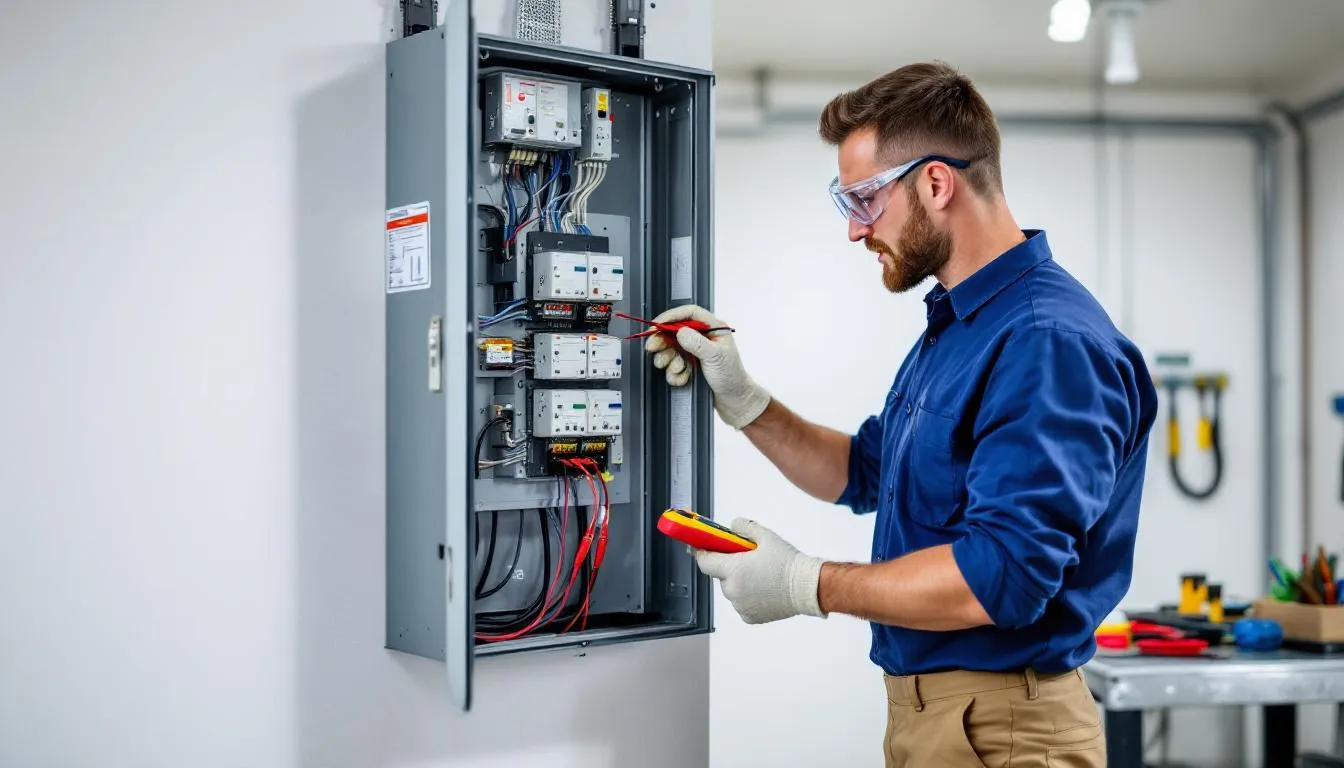
Labs, tech offices, and makerspaces in Irvine and Costa Mesa frequently need both high vertical light and task-level control. Layered lighting with localized dimming assists. Low voltage circuitry Orange County integrators can connect controls into audiovisual and room scheduling systems, but simpleness wins when users seldom touch the scene buttons after week two. Smart home circuitry Orange County practices periodically bleed into small commercial suites, though industrial grade controls normally supply much better durability and Title 24 compliance tools.
Schools and campuses benefit from harmony and long lasting real estates. Recessed lighting Orange County classrooms often convert cleanly to LED panels with low glare diffusers. Outside lighting Orange County fields and quads need cautious aiming and spill control to please neighbors and dark sky sensibilities.
Outdoor lighting, security, and neighbors
Parking and perimeter lighting should provide security without lighting the sky. Select components with proper backlight and uplight limitations, intend them with a light meter in the evening, and coordinate with cam installers so glare does not blind lenses. Occupancy cutting in low-traffic hours keeps the lot inviting while conserving energy. Photocells and astronomical time clocks remove manual changes around daylight saving shifts.
In seaside zones, salt air and fog penalize cheap housings. Define coastal grade finishes. For HOA-adjacent residential or commercial properties, interacting prepared aiming and shielding early can prevent grievances. Where trespass is a threat, a fast field mockup at dusk with a short-term install assists everybody see the outcome and sign off.
Bringing tradition systems along
If your building still runs fluorescents or metal halide and you are not all set for a full upgrade, staged work can still enhance safety and costs. Start with outside and common locations where paybacks are fastest. Change a bank of failed troffers in a pilot area to build comfort with the appearance and controls. The right local electrical contractor Orange County entrepreneur rely on will keep circuitry identified and panels updated so the next phase snaps in. Every stage must include an electrical evaluation Orange County code officials need if circuits are changed, and a neat as-built set speeds future work.
EV infrastructure and lighting typically share timelines. If you are adding an electric lorry battery charger Orange County employees can utilize, coordinate trenching and load estimations so you do not cut asphalt twice. Light the EV parking bays well, with consistent circulation and low glare. The exact same opts for signs and wayfinding at night.
What owners and managers notice after upgrades
A few weeks after turnover, I check in. The first feedback is often about the look. Workplaces feel calmer because glare is down. Storage facilities find checking out labels easier. Parking lots feel safer. Expenses drop, though the first utility statement might lag. Upkeep teams stop hoarding lights. The CFO asks when the next structure is getting the exact same treatment.
There are occasional tweaks. A meeting room may require the daylight setpoint pushed up. A corridor timeout might relax from 10 to 15 minutes. A retail vignette may switch from 4000 K to 3500 K for heat. Quality assurances platforms make those modifications painless, either at the device or from a dashboard. When issues do surface area, a same day electrical expert Orange County dispatch can be the distinction in between a fast fix and a sticking around nuisance.
How to start without stalling
If your structure is ready for a lighting refresh, keep the very first move easy and specific.
- Ask for a concentrated walkthrough from a qualified Orange County electrical contractor who can deliver both style assistance and installation, then demand a short memo with counts, wattage contrasts, and an approximated savings range that utilizes your actual operating hours.
- Select one representative area for a live mockup with 2 or 3 fixture prospects, then collect feedback from the people who work there daily.
- Confirm code triggers and refund paths before you order, then lock the bill of products so incentives stay legitimate and long lead products do not stall work.
- Schedule work in zones that match your operations, then plan a commissioning day where sensing units and schedules are tuned with the users present.
- Capture closeout documents, DLC listings, and service warranties in a shared folder, then log a calendar tip for a 6 month and 12 month check.
Good tasks feel foreseeable. The ideal team handles allowing, collaborates shipments, communicates when a surprise appears above the ceiling, and completes with a tidy punch list. If you need help quickly, a 24 hr electrical expert Orange County service can stabilize a stopping working circuit or a row of dark parking lights while the broader upgrade plan takes shape.
The larger picture
Light shapes how people feel and work. Efficient, well-controlled lighting is one of the few upgrades that saves cash, looks much better, and improves security on the first day. It pairs naturally with other modernization moves like an electrical panel upgrade, generator upkeep for vital systems, and even a phased entire home rewiring Orange County house owners may require in mixed-use properties above retail. Yet even if lighting is the only modification you make this year, the outcomes base on their own.
If you are looking at buzzing lamps, yellowed lenses, or a parking area that looks like a patchwork after years of spot fixes, it is time. Bring in a team that deals with lighting as both an art and an energy system. With the right style, solid items, and a dependable local electrical expert Orange County home supervisors can call when they require them, your building will save energy and shine intense for several years to come.